Note: Linguistic and cultural marginalization in Las Niñas Quispe: A Sapir-Whorf approach
DOI:
https://doi.org/10.35588/ayr.v7i2.7562Keywords:
Linguistic relativity, Sapir-Whorf hypothesis, Sebastián SepúlvedaAbstract
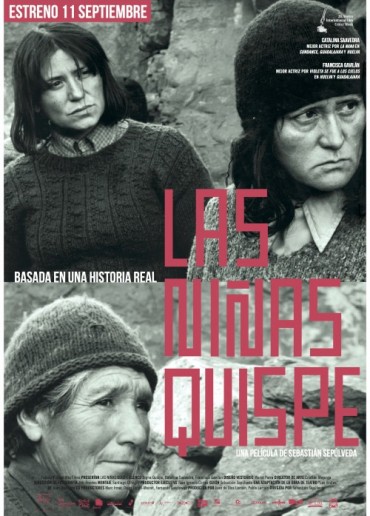
This note presents a review of the film Las niñas Quispe (Sepúlveda, 2013) through the lens of the Sapir-Whorf hypothesis. Based on the true story of three Colla sisters in the Chilean highlands during the 1970s, the film portrays a world marked by silence, illiteracy, and limited interactions and communicative resources that restrict the characters’ ability to imagine alternative futures. The film reveals how symbolic exclusion operates beyond material deprivation, constraining not only expression but also access to broader worldviews. From a moderate interpretation of linguistic relativity, it can be observed that language does not strictly determine the sisters’ tragic fate, but it does profoundly shape their ways of perceiving and engaging with reality. Ultimately, the film stands as a powerful metaphor for how the impoverishment of language can narrow the horizon of what is thinkable, turning silence into both a survival mechanism and a forced choice.
Downloads
References
Bortignon, M. (2019). Vidas que no son las nuestras. Obra y crítica en tránsito entre culturas en Las brutas de Rafael Díaz y Las niñas Quispe de Sebastián Sepúlveda. Confluenze. Rivista Di Studi Iberoamericani, 11(2), 317–338. https://doi.org/10.6092/issn.2036-0967/10279
Bujes, J. (2008). Los Collas de Atacama: Identidad y Etnogénesis [Tesis, Universidad Academia de Humanismo Cristiano].
Gil, J. M. (2001). Introducción a las teorías lingüísticas del siglo XX (2.ª ed.). RIL Editores.
Kristeva, J. (1988). El lenguaje, ese desconocido: Introducción a la lingüística. Editorial Fundamentos.
Leroy, M. (1969). Las grandes corrientes de la lingüística. Fondo de Cultura Económica.
Mercado Guerra, J., & Gundermann Kröll, H. (2022). Ideologías linguísticas en comunidades educativas atacameñas, collas y diaguitas. RLA. Revista de lingüística teórica y aplicada, 60(1), 69-95. http://dx.doi.org/10.29393/rla60-3iljh20003
Navarro-Daniels, V. (2018). El suicidio como forma de resistencia: Las niñas Quispe, de Sebastián Sepúlveda. Letras Femeninas, 43(2), 39–54. https://doi.org/10.14321/letrfeme.43.2.0039
Natsir, M., Harahap, N.H., & Khairani, R. (2025). The role of language in shaping human thought: A study of the Sapir-Whorf Hypothesis. Journal of Learning and Teaching, 2(1), 22-29.
Robins, R.H. (2013). A short history of linguistics (4th ed.). Routledge.
Sapir, E. (1921). Language: An introduction to the study of speech. Harcourt, Brace and Company.
Sepúlveda, S. (Director). (2013). Las niñas Quispe [Película]. Dolce Vita Films.
Downloads
Submitted
2025-08-24Published
Issue
Section
License
Copyright (c) 2025 Jessica Vega-Abarzúa

This work is licensed under a Creative Commons Attribution 4.0 International License.